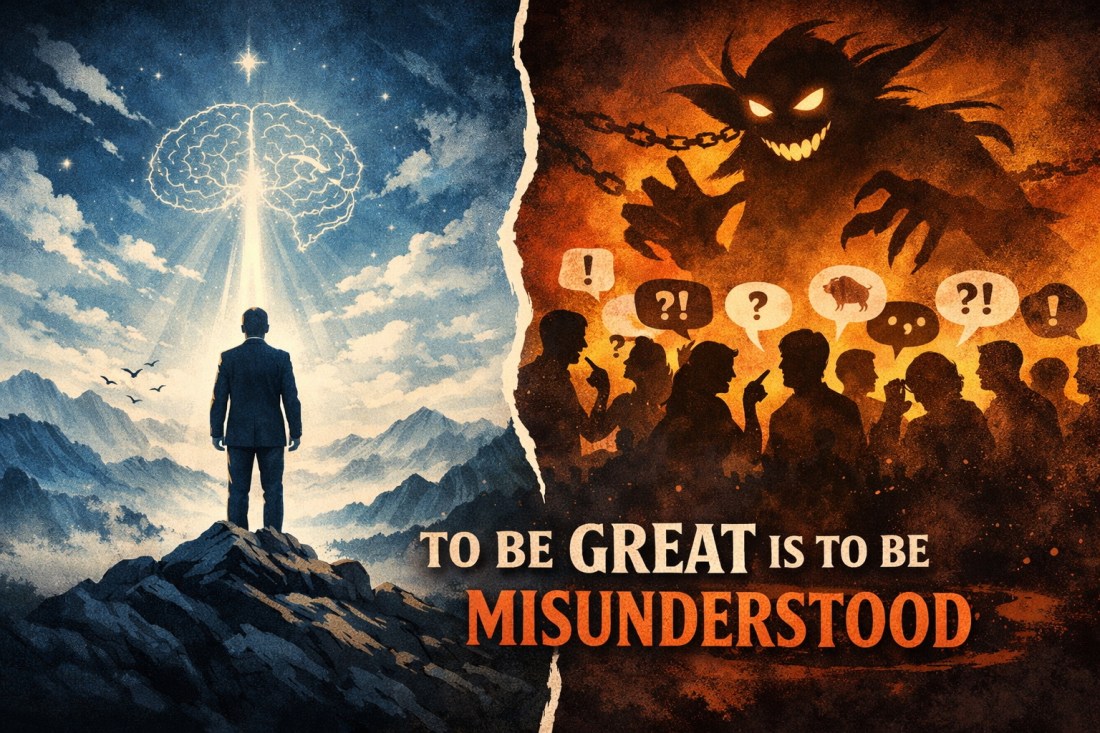
Ralph Waldo Emerson wrote "to be great is to be misunderstood" nearly two centuries ago, and it has lost none of its force. This essay unpacks what he actually meant, where the idea gets uncomfortable, and why the mere fact of being disagreed with proves nothing on its own. The key distinction: are you misunderstood because you are unclear and careless, or because you are saying something true that others are not yet ready to process? Emerson's challenge is to earn the second category, speak plainly, think rigorously, and then refuse to dilute the truth just to be liked. If no one ever misunderstands you, you are probably not saying anything worth remembering
To Be Great Is To Be Misunderstood