A Couple of Feet in Either Direction

In February 2013, on the way home from my best friend's wedding in St. Lucia, a tractor hit our bus a couple of feet from the passenger cabin. The truck driver who caused it did not survive. Five years later, lightning hit our house while we were inside. Ten years later, I lost the friend whose wedding put me on that bus. This is an essay about the near misses we see, the far greater number we never hear about, and why surviving does not mean you were chosen, but does leave you with a choice.

I Have Lived Four Lives. My Forties Are All of Them at Once.

Family, then friends, then yourself, then a family of your own. Each decade of life has its own center of gravity, until the forties arrive and ask you to live all four at once. This essay argues those decades were never separate lives but an apprenticeship: belonging, chosen loyalty, self-knowledge, and responsibility, all called on in the same afternoon. It takes the honest objection seriously (maybe the pattern is just hindsight), then lands on what the forties ask of us, closing with a mantra my mom carved into a plaque for my thirtieth birthday.

“That’s an Appeal to Authority!” No. It Isn’t.

Name a fallacy, win the argument. That is the ritual, and it is nonsense. This essay takes apart the most abused phrase in modern discourse: the reflexive charge of "appeal to authority." It traces what Locke actually meant by argumentum ad verecundiam, lays out the narrow and specific conditions under which the fallacy is real, and explains why citing Einstein on physics is not one of them. It also gives the skeptics their due, because institutional authority has earned suspicion. But the answer to unreliable experts is getting better at evaluating them, not declaring all expertise fallacious. Featuring the fallacy fallacy, Schopenhauer being characteristically ruthless, and a direct answer to the most common objection to "Not All Opinions Are Created Equal."

13 Things You Should Give Up If You Want To Be Successful, And What Each One Actually Costs You

Originally appearing on Medium.com, '13 Things You Should Give Up If You Want To Be Successful' by Zdravko Bato Cvijetic is a MUST READ and now it is proudly part of my #requiredreading list. Below is the pithy list but trust me, not only should you read the entire essay, you should soak it up and make it a part of who you are.

You Can’t Steal an Idea. So Why Can You Own One?

If I steal your car, you no longer have a car. If I steal your idea, you still have it, which means theft and copying were never the same act, no matter what patent law assumes. This essay traces that distinction into the price of medicine, gives the honest incentive argument for patents its full due, and shows where it stops holding up, using publicly funded research, generic drug pricing, and entire industries that already innovate just fine without any legal monopoly at all.

You Are the Rich Person in This Argument

We treat "tax the rich" as self-evident. It is not. This essay states the honest case for progressive taxation before taking it apart, traces just how recent and contested the modern income tax actually is, and lands on a simpler argument: if you believe the wealthy should give more, you already know one, by any honest global standard. Featuring a citation-backed nod to the strongest form of the opposing case, instead of a strawman.

Compete Against Yourself Today. Tomorrow, You Will Defeat A Lesser Foe

Max Ehrmann warned us in 1927. If you compare yourself with others, you may become vain and bitter. He was right. The only competition that has ever made sense is you versus yourself from yesterday.

We Don’t Talk About the Weather

Reflecting on a deep friendship with Chad, emphasizing that meaningful conversations focused on significant ideas and honesty overshadowed trivial topics like the weather. I try to highlight the importance of genuine connections that enhance personal growth and urge readers to prioritize substantial discussions over small talk, reinforcing that vital conversations require intentionality.

Leading from Behind

Some of the most powerful leaders you will ever encounter are the ones you barely notice. This essay explores the concept of leading from behind, inspired by a conversation with someone whose wisdom and grace left a lasting impression. It makes the case that true leadership is not about barking orders or taking credit, it is about asking the right questions, creating the conditions for others to discover things on their own, and serving without any need for recognition. Featuring a quietly remarkable story of anonymous generosity, fifty-one years of partnership, and the belief that mentoring the next generation is not optional. It is what we are here for.

History Is a Theory. Start Treating It Like One.

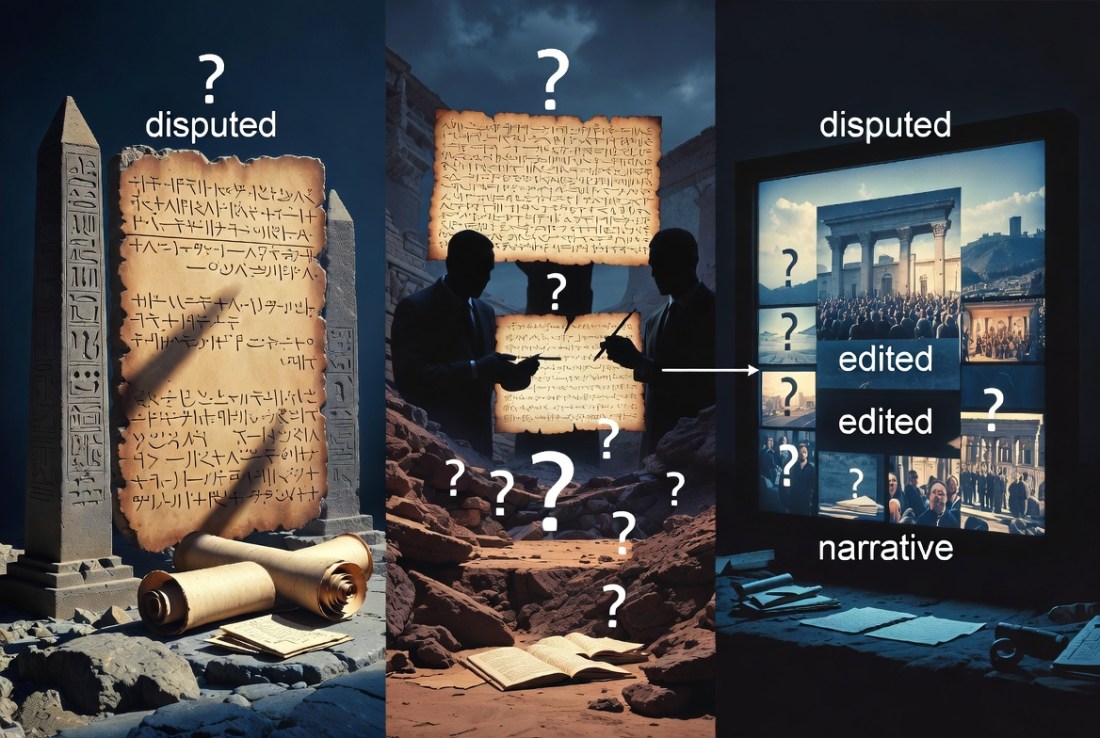
History is presented as fact. It is not. It is a collection of theories, interpretations, and narratives shaped by the same flawed, self-interested humans who run the world today. If we can watch governments manipulate the record in real time in 2026, it is naive to think it was any different a thousand or five thousand years ago. This essay argues that dead languages cannot be definitively translated, that archaeological certainty is constantly being revised, and that even events captured on video remain disputed. Intellectual honesty about the past is not cynicism. It is simply the truth.