
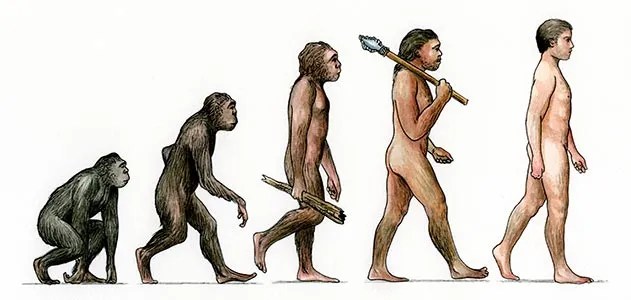
Human history, it can be argued, follows a linear trajectory of development, a relentless march forward into an ever-evolving horizon. The general acceptance of evolution as an inalienable truth of life is vital for this discourse. It proposes the hypothesis that we, the collective humanity of the 21st century, are more accomplished, more advanced, and better adapted to our world than the denizens of yesteryears. Indeed, we assertively stride on the shoulders of generations past, attaining heights that would have been unfathomable to our predecessors a century, a millennium, or ten millennia ago.
An examination of nearly any human endeavor (save landing humans on the moon) reinforces this assertion. From the athletic to the intellectual, from the artistic to the scientific, contemporary man excels beyond comparison. It’s undeniable that our present capacity for achievement dwarfs that of previous generations, not merely in isolated instances, but across the board.
Take, for example, the realm of athletics. Of course, there have been extraordinary athletes of yore, titans of their time whose prowess might still hold a candle to today’s sporting elite. A baseball player from the era of the Roaring Nineteen Twenties might pitch at par with the best of our present leagues. Yet, it’s crucial to understand this as an anomaly, not a standard. In general, sportsmen from the 1920s lack the polished skills, rigorous training, and access to state-of-the-art facilities that characterize the average professional athlete of today. Similarly, a luminary like Larry Bird may have graced the basketball courts of this era, but most of his contemporaries would likely pale in comparison.
The same pattern holds true across virtually all disciplines. Whether we speak of chess, art, engineering, architecture, or medicine, the benchmarks of excellence have been progressively raised over the ages. Today’s leading intellectuals stand on the vanguard of thought, exponentially building on the knowledge and insights of those who came before them.
Given this undeniable ascendancy, it begs the question of why we permit the ghosts of our past to exert such influence over us. We accord a reverence to tradition that sometimes impedes our forward momentum. Tradition, in many ways, is the echo of voices long silenced, imposing their will upon us from beyond the grave. Are we not, as a species, predisposed to evolve, to become bigger, stronger, faster, and more proficient in our endeavors? Instead many fall victim to tradition: peer pressure from dead people.
Failing to acknowledge the superiority of today’s athletes over those from Babe Ruth’s time, or those in any field of endeavor, smacks of intellectual dishonesty. The performance gap, the technological advancements, the nuanced understanding of human biomechanics, and the advancements in training methodologies make the comparison unambiguous.
Respect for tradition and our predecessors should not equate to a wholesale acceptance of their ideas, their norms, and their limitations. The greater gift we can give them, and ourselves, is the commitment to progress, to evolve, and to outstrip even our wildest imaginations. For it is through this evolutionary process, our species has, and will continue to, flourish.
Discover more from logical thinking in an illogical world
Subscribe to get the latest posts sent to your email.


One thought on “Tradition and Evolution: Acknowledging the Flourishing Arc of Human Progress”