
In the dimly lit corridors of life, Kenny Rogers’ timeless song “The Gambler” echoes profound truths through the allegory of a card game. Each verse and chorus carries a weight that transcends the felt-covered tables and enters the realm of human experience. Here, we decipher the song’s lyrics, finding in them a guide to navigating the complexities of existence.
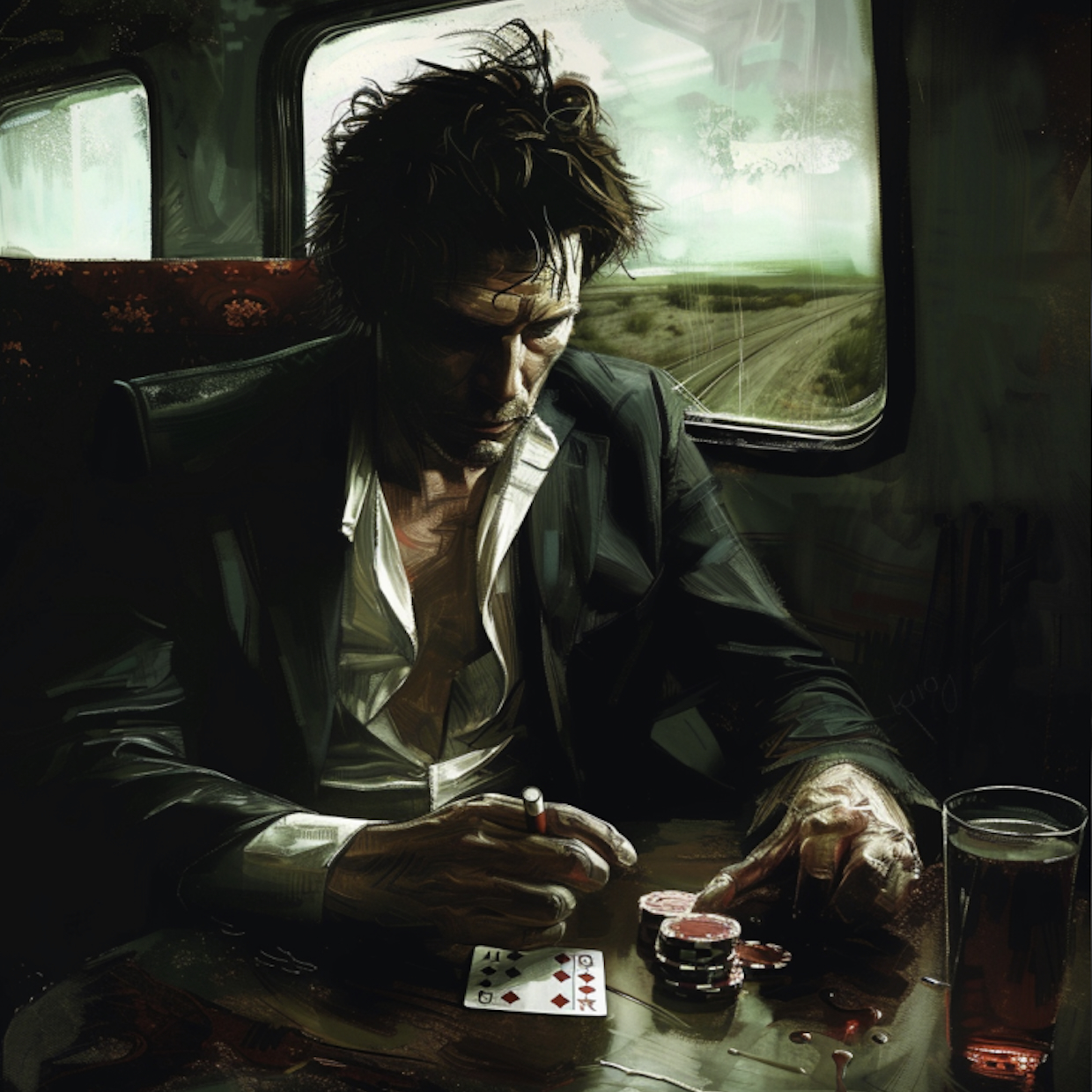
The song begins with a weary traveler meeting an old gambler, an encounter that symbolizes the moments in life when we meet someone with the wisdom of experience, someone who has seen the ebb and flow of fortune and has come out the other side with insights to share. “On a train bound for nowhere,” the gambler imparts his wisdom, reminding us that often, life’s journey doesn’t seem to have a clear destination. It’s on this journey that we’re most open to the wisdom of those who have traveled before us.
The gambler’s first piece of advice, “Know when to hold ’em, know when to fold ’em,” serves as a metaphor for the decisions we face. To “hold ’em” is to stick with our choices, to see our commitments through when we believe in the potential outcome. Conversely, to “fold ’em” is to acknowledge when a path no longer serves us, to let go rather than to force an untenable situation. This wisdom implores us to weigh our options carefully, to assess the risks and to be brave enough to act accordingly.
“Know when to walk away, and know when to run,” the gambler continues. Here, he speaks to the importance of recognizing our limits. There are circumstances that call for a strategic retreat, to preserve our resources, and to protect our well-being. And then, there are times when the stakes are too high, when the danger to our physical or emotional self is imminent, and swift action is required. Life demands both patience and the discernment to choose our battles.
The gambler also advises that “If you’re gonna play the game, boy, you gotta learn to play it right.” This is a clarion call for competence and understanding the rules of any endeavor we undertake. Whether it’s our career, relationships, or personal goals, understanding the fundamental principles that govern these areas is crucial to our success.
In life’s poker game, the gambler notes that “Every hand’s a winner, and every hand’s a loser.” This is perhaps the most poignant of the song’s assertions. It’s a recognition that in life, as in cards, what we’re dealt is less important than how we play the hand. Opportunities can be found in the most challenging of circumstances, and losses can be encountered even when we seem to hold all the aces. It’s a call to make the most of what we have, to find value in our experiences, and to learn from both triumphs and defeats. The Stoics referred to this concept as “amor fati”, meaning “a love of all fates”.
The gambler’s final act, “And when he finished speaking, he turned back toward the window, crushed out his cigarette and faded off to sleep,” symbolizes the transient nature of such encounters and the inevitable conclusion of life itself. The gambler’s sleep is a metaphor for the final rest, the end of life’s journey, which we must accept can come at any time. He leaves behind the wisdom he has shared, trusting that it will carry on beyond his own “time at the table”, or what I like to believe in as “time in this realm”.
In conclusion, “The Gambler” is not just a song about a card game; it’s a reflection on life’s precarious balance. It’s about knowing oneself, playing the hand we’re dealt with courage and integrity, and attempting to understand the impermanent nature of our existence. Kenny Rogers, through his melodious storytelling, offers a blueprint for life’s gamble—reminding us that the game is not just about the cards we’re holding, but about how we play them, and perhaps most importantly, how we live between the dealing and the folding.
Discover more from logical thinking in an illogical world
Subscribe to get the latest posts sent to your email.

