

The product is major league. The governance isn’t yet.
A few days ago I posted something mildly ungenerous about Major League Pickleball (@MajorLeaguePB). I said the league still comes off as unserious, and I said it as a fan. Ross Chaifetz (@RossChaifetz), who owns and runs the St. Louis Shock (@stlshockmlp), replied with four words that most owners never bother to type: How so, and what do you think can be done to improve that narrative?
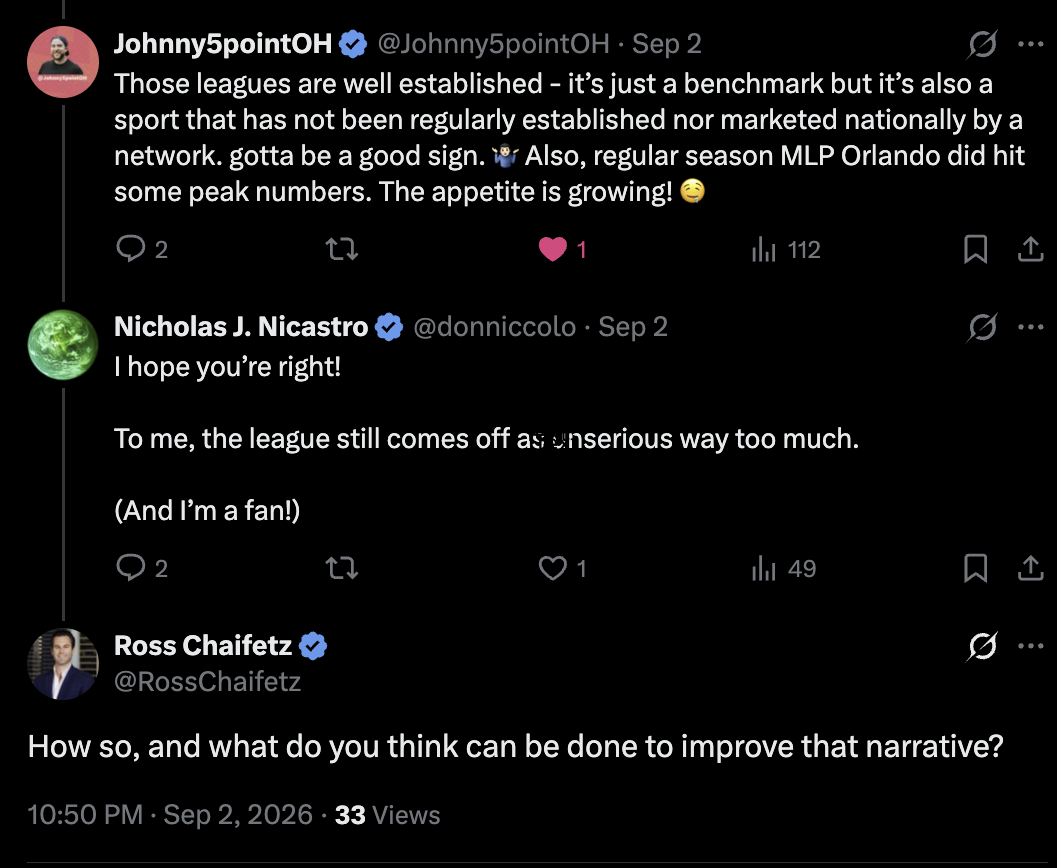
That is not a small thing. Most people who own something respond to criticism by defending it. Asking the critic to show his work is harder, and it deserves a real answer rather than a snarky reply and a scroll. So I spent a few days on this instead of firing back in a quote tweet. What follows is the most useful thing I know how to give him. (Don’t hate me, Ross! 👊🏼)
Let me be clear about where I sit. I live in Columbus. I go to the event at Pickle and Chill when the league comes to town. I root for the Sliders (@CbusSliders), who won the whole thing in 2025 and made me insufferable about it for a solid month. I am not writing this from the outside. I am writing it as someone who has paid for tickets and would like to keep paying for them for twenty years.
And the product is good. Saturday of the Finals drew 4,200 people to Central Park, a single-day attendance record for the league. Sunday’s CBS window averaged 773,000 viewers, an all-time league record and roughly 55 percent above last year. The competition itself, the Dreambreaker, the city-by-city format, the actual pickleball, all of it works. Nobody needs to fix the entertainment.
So when I say unserious, I do not mean bad. I mean something more specific, and I think it is the single thing standing between this league and the one it clearly wants to be.
What “unserious” actually means
A sports league is a promise. The promise is that the thing you are watching is being decided on the court, under rules that were written before anyone knew who they would help. That promise is the entire product. It is why a fan in Columbus cares what happens to four people he has never met. Strip it away and you are left with exhibition tennis: pleasant, athletic, and fundamentally not worth arguing about at a bar.
Every professional league protects that promise obsessively, not because commissioners are unusually noble, but because the promise is the asset. Everything else, the ticket revenue, the media deal, the franchise valuations, is downstream of a fan believing the outcome was real.
MLP has a habit of treating that promise as negotiable. Not maliciously. Usually in service of a reasonable short-term goal. But the cumulative effect is a league that keeps telling its own fans, in a hundred small ways, that the rules are more like guidelines.
Here is where that showed up in 2026, and what I would do about it.
1. The rules moved during the season, and it decided the championship
The 2026 trade deadline was originally June 30. The league moved it to July 12. It finally closed on July 20 at noon.
Set aside whether July 20 is a reasonable date in the abstract. It is roughly where other leagues land. MLB’s 2026 deadline was August 3, the NBA’s sat in early February, the NHL’s in early March, and all of them fall somewhere between two thirds and four fifths of the way through a regular season. MLP’s July 20 came after seven of nine regular season events. On the calendar, it is somewhat defensible.
The problem is not where it landed. The problem is that it moved, twice, in season. On July 20, New Jersey (@the5spickleball) acquired Federico Staksrud (@federicostak) from Orlando in a deal reported to include $400,000 in cash, understood to be the maximum permitted on a two-player trade. For that money, the 5s were buying two regular season events and a playoff run.
Six weeks later he was Finals MVP.
Look at what he actually did. Saturday’s Finals match went to a Dreambreaker that New Jersey won 22-20. Two points. In that Dreambreaker, Staksrud outscored Hunter Johnson, then a top-three men’s singles player in the world, by seven to five. On Sunday he beat Johnson again, six to two, as New Jersey closed it out 21-9.
Take Staksrud off that roster and Saturday is a coin flip. There is no sweep, and possibly no title.
Under the deadline the league originally published, he is never on that roster.
I want to be careful here, because I am not alleging anything. I do not think anyone moved a date to engineer a champion. Nobody had any idea in June what Staksrud would do in August. That is exactly the point. Rules are not there to stop people from cheating. Rules are there so that when something extraordinary happens, nobody has to wonder.
Right now a fan can look at the 2026 season and construct a coherent story in which the champion was determined by an administrative decision. Whether or not that story is true is almost beside the point. A serious league does not leave the story available.
What I would do: Publish the full competition calendar, including the trade deadline, in the offseason. Then treat it as immovable. If a coming rules change requires more runway, build that runway into next year’s calendar rather than reaching into this year’s. Every league on earth faces scheduling pressure and solves it without moving deadlines mid-flight. MLB sets its deadline in January and does not touch it.
One date, published once, honored absolutely. That change costs nothing and buys more credibility than any marketing campaign this league will ever run.
2. The schedule isn’t balanced, and it should be
With twenty teams and each playing five of nine regular season events, some teams draw a brutal slate and some draw a soft one. I have not run the full matrix, so take this as a fan’s observation rather than a spreadsheet. But in a season where the gap between the top five teams and everyone else was as wide as it was in 2026, which five events you happen to draw is not a rounding error. It is the difference between making the playoffs and not.
Then there are the pools. Most 2026 events ran eleven teams split into groups of five and six. One group plays four matches to get through pool play. The other plays five. Same event, same standings, different amount of pickleball, and an extra chance to be caught on a bad day.
Nobody designed that on purpose. It is arithmetic. But fans notice arithmetic, and every one of these is a small withdrawal from the same account.
What I would do: Four things, all boring and all fixable.
First, balance the schedule by strength of opponent. This is a solved problem. The NFL has done it for decades. Take last year’s finish and build each team’s five events so the aggregate difficulty is comparable. It will never be perfect. It should not be random.
Second, make the pools equal, or structure the event so an uneven split does not change how many matches a team plays to earn the same points.
Third, and I suspect this is the least popular idea in this letter: not every team should score at every event. If you win nothing, you should earn nothing. Participation points are how a league signals that its regular season is a tour stop rather than a competition. Let teams finish last and feel it. That is what makes finishing first mean something.
Fourth, and I raise this with genuine humility because it is nowhere near my area of expertise: please make the website better. I do not know what is difficult about this and I am not going to pretend otherwise. I only know that every time I have gone looking for the current standings, or the points a team banked at a given event, or where Columbus sat with two stops to go, I have come away more frustrated than informed. A regular season is a story told across three months, and a fan can only follow that story if the scoreboard is legible before, during, and in between the weekends when the cameras are on. Whatever else is on the technology roadmap, I would move this one up. Everything I have argued above is about making the standings worth trusting. None of it matters if a fan cannot find them.
3. The Mid-Season Tournament was the best event of the year and doesn’t count like it
Grand Rapids was terrific. Every team in one place, real stakes in the air, exactly the kind of showcase a young league should build a season around.
And it counts for far less than the product on the court deserved.
If the league’s best event is weighted like an ordinary stop, the league has told its fans what to think about it. Worse, it has told its teams, and teams optimize for what pays.
What I would do: Weight it like it matters. Whatever the standings points are for a regular season event, the Mid-Season Tournament should be worth meaningfully more. Every league has a marquee midpoint moment and most of them waste it on an all-star game nobody tries in. MLP accidentally built a better one. Fund it with points.
4. Forced roster turnover is the biggest problem, and it is the one nobody is talking about
This is the one I care about most, and I think it is the one that will quietly cap this league’s growth if it does not change.
I root for the Columbus Sliders. But the Columbus Sliders are not a building or a color scheme. They are six people. And the league has built a system that guarantees those six people will not be the same six people for very long.
Look at what is in front of Columbus heading into 2027. Of the four starters who won the 2025 championship, Lea Jansen is already in Texas. Of the rest, Andrei Daescu, CJ Klinger, and Parris Todd are all ineligible to be kept. The Sliders can retain Judit Castillo and Alex Crum. That is it. A fan who bought a championship jersey in August of 2025 will watch that roster dissolve within two seasons, not because of free agency, not because anyone chose to move on, but because the rules require it.
Ross, you know this better than I do, because your own team is the cleaner example. St. Louis just went to the Finals. Heading into 2027 the keeper rules allow no more than two players of the same gender, which means if you protect Anna Bright and Kate Fahey, Hayden Patriquin, Gabe Tardio, and Hunter Johnson all go back into the pool. You can bid to get them back. You cannot simply keep them. The three men who carried you to a championship match are, as a matter of rule, no longer yours.
That is not a competitive balance mechanism. That is a scheduled teardown.
I went looking for another professional league that does this, and I found exactly one that comes close. Cricket’s IPL runs an auction draft much like MLP’s, and it does periodically force teams back to the market. But the comparison cuts against the current rule rather than for it. The IPL holds that reset every three or four years, not every year, and lets teams retain up to six of a twenty-five man squad in between. It also started with a lower retention number and has raised it over time, in large part because constant churn was eroding franchise identity and fan loyalty.
The one league in the world built on the same bones as MLP ran a gentler version of this experiment and has been walking away from it.
Every other league produces turnover, obviously. Cap pressure, expiring contracts, free agency, players choosing to leave. What no other league does is walk into a functioning roster and require the team to break it up regardless of whether anyone wants to and regardless of whether the team can afford to keep them.
I understand the reasoning. You want talent distributed. You want the draft to matter. You do not want four superteams and sixteen also-rans. Those are real goals and I am not dismissing them. But a salary cap is coming precisely to accomplish that, which means forced turnover is now solving the same problem twice while creating a new one.
Here is the new one. Fan allegiance is not transferable to a logo. It is built on watching specific people fail, and then fail again, and then finally not fail. It takes years. The league is currently preventing that clock from ever starting.
What I would do: Stop requiring teams to drop anyone. Not after two years, not after three, not ever.
The cap does the balancing. That is what a cap is for. Let it work.
If the worry is that a team sitting on early bargains could hold a cheap dynasty forever, the answer is a price, not a prohibition. Escalate keeper costs. Every year you keep a player, his number against your cap goes up. Keep him long enough and he consumes your budget, and then you make the hard choice yourself instead of having it made for you on a calendar. Baseball has run a version of this for fifty years, and it is the reason a fan in Cleveland knows exactly how many summers he has left with somebody (before they go to New York!) That knowledge is not a bug. It is most of the emotion in the sport.
Let the cap decide how much a team may spend. Let the team decide on whom. That is the whole architecture, and it is not complicated.
Give me four+ years with the same four players and I will give you a fan for life. Give me a new roster every spring and you have given me a fantasy team, and nobody buys a jersey for a fantasy team.
5. The cap is the right fix, and the league already abandoned it once
The league is moving to a $1 million cap on player acquisition for 2027 with a $500,000 floor, plus a ceiling on any single player and a right of first refusal. The details are still being finalized, but the direction is right. It addresses the real problem, which is that a handful of teams bought their way into a different league than everyone else.
But here is the part that belongs in a letter about being taken seriously.
MLP had a $1 million cap and a $500,000 floor in 2024. Those numbers are not new. The league wrote the rule, then seemingly stopped enforcing it in 2025 and 2026. What followed was entirely predictable: Anna Bright (@annabright108) went for $1.23 million, Jorja Johnson for $800,000, and the competitive spread everyone spent 2026 complaining about.
So the league is now reinstating a rule it already had and then discarded. I am genuinely glad. But I hope somebody in the room is asking the obvious question, which is not “is the cap a good idea.” It is “what stops this cap from going the way of the last one?”
What I would do: Say out loud what the amendment process is. Who can change a competition rule, by what vote, and on what timeline. If a rule can be suspended by a decision nobody sees, it is not a rule. It is a preference. Publishing the process is free, and it is the difference between a league and a promotion.
6. A scoreboard fell on a player, and that is an operations story
On June 25 at MLP New York, a roughly thirty foot LED baseline board caught a wind gust and went over onto the court, pinning Rachel Rohrabacher’s leg. Play stopped for about thirty minutes. She walked off under her own power and did not finish the match.
I want to be fair here. Nobody was seriously hurt, the league’s statement attributed it to wind, and the boards were secured before play resumed. Wind is wind.
But this is the kind of thing that shapes a narrative more than any rules dispute, because it is visual and it travels. Clips went around the world within a day, some with commentary in languages I cannot read. The sport looked improvised in front of an audience that had never seen it before.
What I would do: Publish outdoor event standards. Wind thresholds for temporary structures, load ratings, a named person at every event with authority to stop play or strike a board. It is dull, it costs almost nothing, and it is precisely the sort of infrastructure that separates a professional operation from a very well attended tournament. Every league that plays outdoors has a version of this document. MLP should have one before the next incident rather than after.
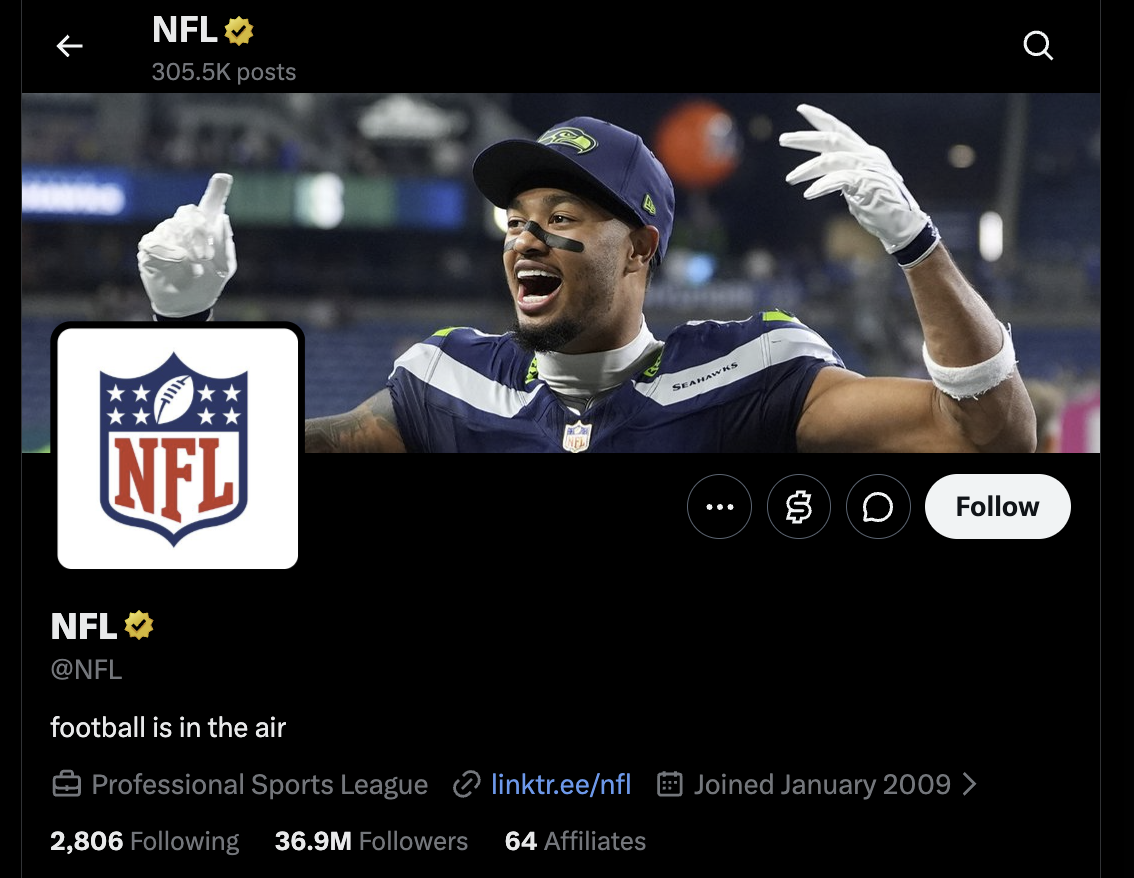
7. Every team should be verified on X, and this one is nearly free
Love the platform or loathe it, X is where sports arguments happen now. It is the closest thing we have to a town square, and on a town square the first thing anyone wants to know about a stranger is whether he is who he claims to be.
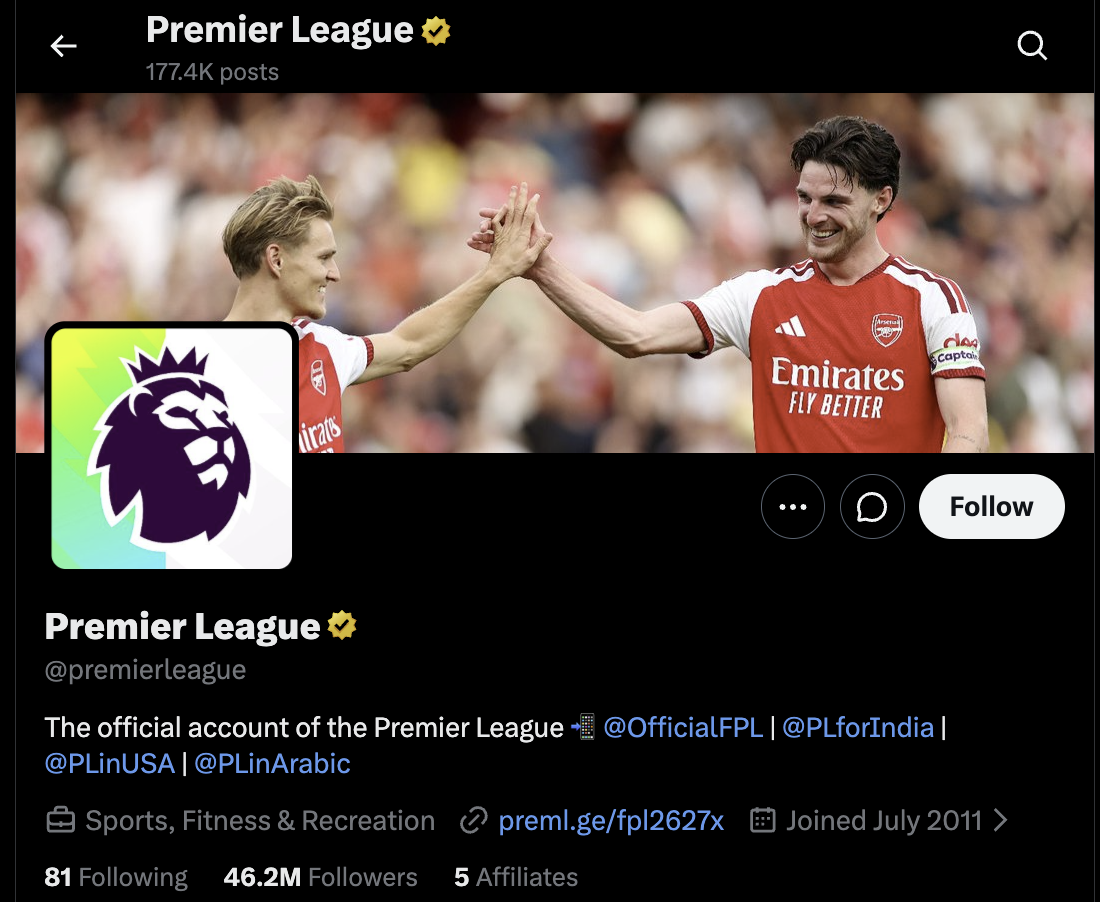
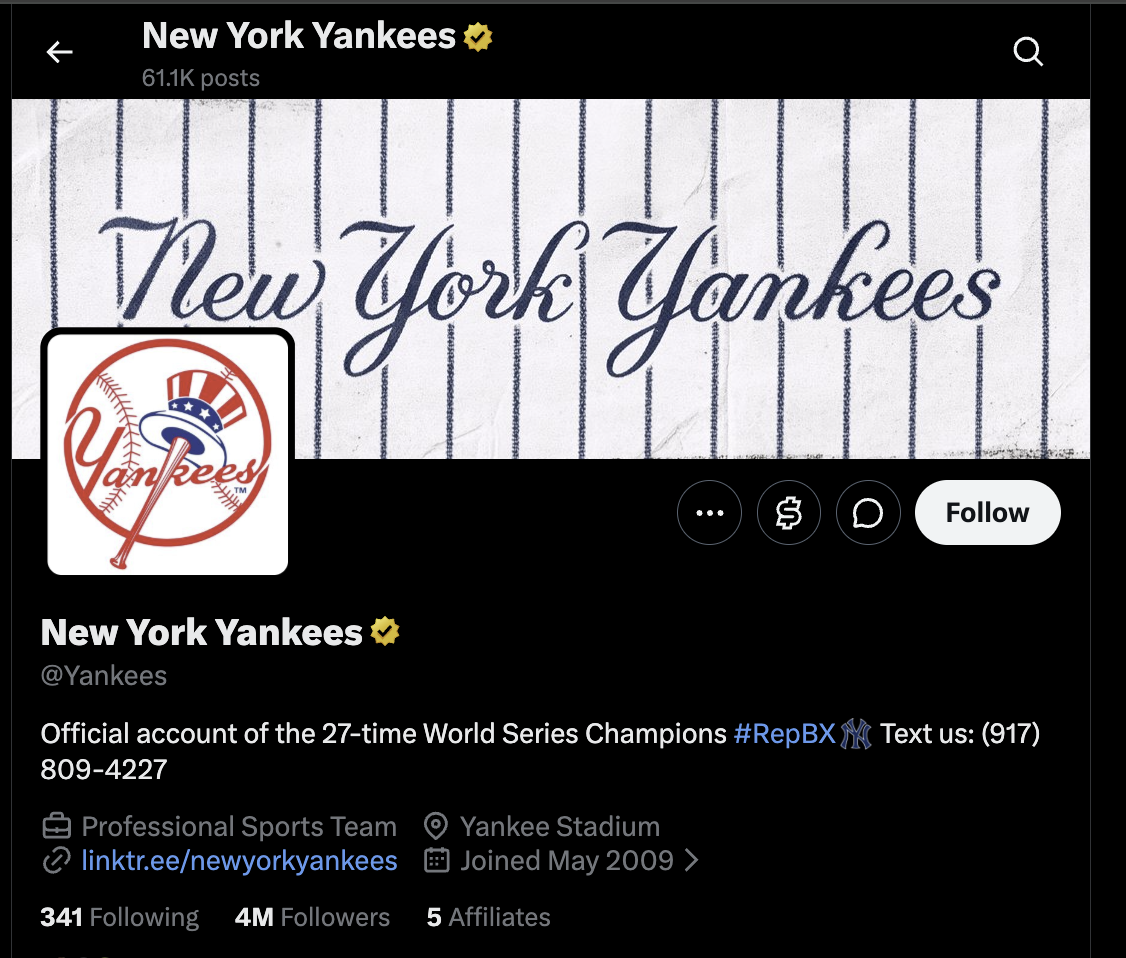
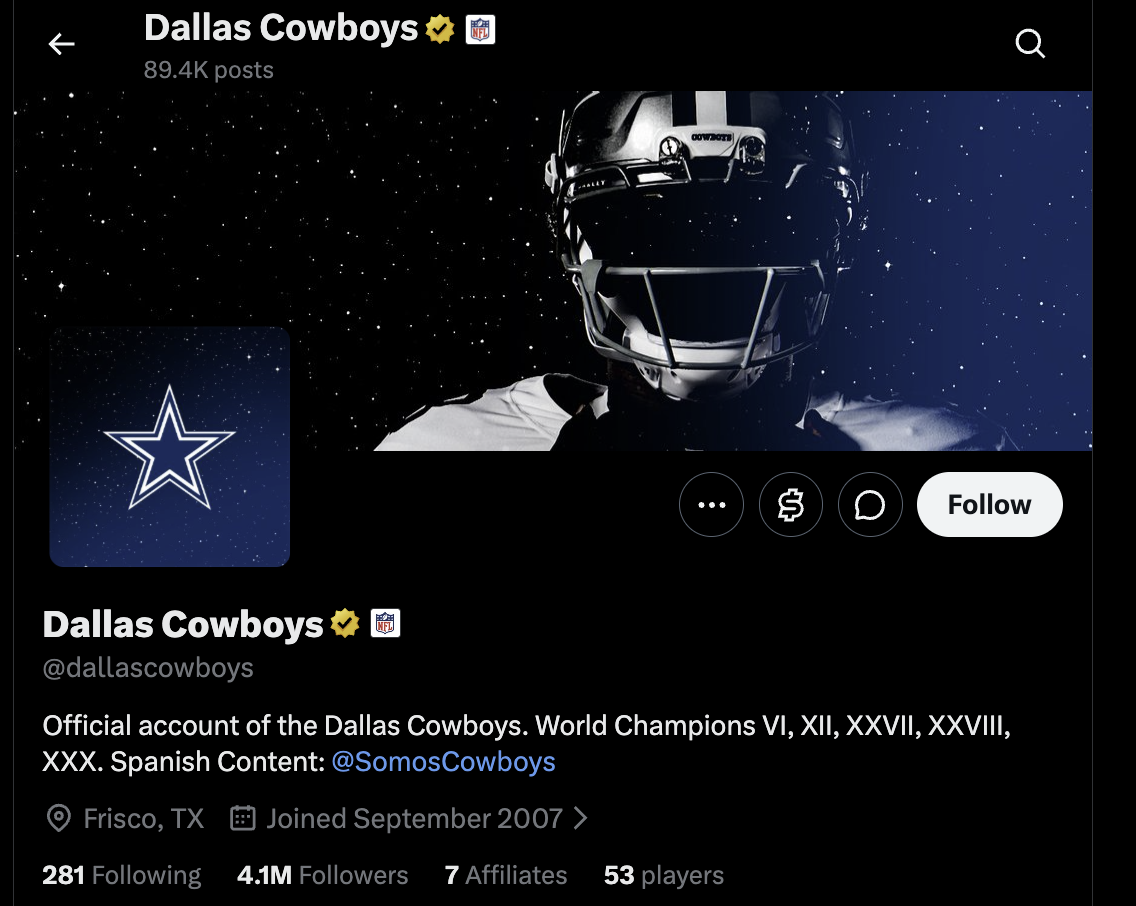
From what I can find, every professional league I looked at follows the same pattern without exception. The league runs an official verified account, and so does every team under it. The NFL (@NFL) and the Cowboys (@dallascowboys). The NBA (@NBA) and the Lakers (@Lakers). MLB (@MLB) and the Yankees (@Yankees). The NHL (@NHL) and the Maple Leafs (@MapleLeafs). The Premier League (@premierleague) and Manchester United (@ManUtd). X also offers an affiliation layer at its organization tier that puts the league’s logo beside a team’s name, and some leagues use it and some do not. But the baseline everybody meets is simpler than that. If you are a team in a professional league, your account is verified.
I would like every MLP team to meet that baseline, handled centrally by the league rather than left to each franchise to sort out on its own.
This fixes nothing competitive and I am not going to pretend otherwise. But it is cheap, it is administered from one desk, and it is roughly an afternoon of work. Impersonation accounts exist in every sport, and a checkmark is the only fast way a newcomer can tell a franchise from an enthusiastic supporter running a page off his couch. Right now, a fan who watched the Finals on CBS, went looking for his local team, and landed on an unbadged handle has learned something about how organized this league is, and it is not the thing you want him learning.
Fix the cheapest signal first.
8. A question I am not qualified to answer: are there too many teams?
I keep hearing that there are too many teams, and I am not going to pretend I can tell twenty ownership groups which of them should not exist. That is above my pay grade and frankly above my standing as a guy with a ticket.
But I would ask the league to look honestly at a piece of evidence it produced itself.
Read any credible preview of the 2027 draft and you will find nearly every team running the same plan: keep one or two inexpensive men, then spend most of the cap chasing the best available women. When twenty franchises independently arrive at an identical strategy, that is not twenty clever front offices. That is a market telling you the talent pool is thinner than the roster count.
Three franchises did not field teams in 2026. The Hustlers merged into Brooklyn (@brooklynpickleb). Nashville and DC went looking for buyers. That is not nothing.
So I will not tell you the number is wrong. I will ask whether the league has a defensible answer for why it is right, and whether that answer is about the depth of the talent pool or about the appetite of the ownership market. Those are different questions, and only one of them produces good pickleball.
Why I bothered
Ross, you asked a fan how to fix your league’s narrative, in public, under your own name, three days after your team lost the championship match. I have run businesses for twenty years and I can tell you that is not the normal instinct. The normal instinct is to explain why the critic does not understand.
Everything above is fixable, and most of it is fixable in an afternoon by a group of people in a room with a calendar. None of it requires more money, better athletes, or a bigger television deal. It requires deciding that the rules are load bearing.
The league already knows how to do this, by the way. Fans complained after 2025 that they could not tell who won an individual event. The league listened and rebuilt the format. That is the muscle. It works. It just needs to be pointed at the plumbing rather than the presentation.
The 773,000 people who watched on CBS did not show up because the format was elegant. They showed up because the sport is genuinely great. The format is what decides whether they come back in 2030.
I will be at Pickle and Chill next spring either way, yelling at whoever happens to be wearing the Columbus jersey. I would just like to recognize them.
Thank you for asking. Genuinely. And if the Shock are in Columbus next season, find me. I will buy the first round and we can get on a court afterward. I promise to take it easy on you.
Nick Nicastro
Sources: Major League Pickleball, Pickleball.com, The Kitchen, The Dink, Forbes, ESPNcricinfo. Cash figures in the Staksrud trade are as reported; the league did not disclose them. 2027 competition rules are as previewed and remain subject to change. Some structural observations here come from conversations with people working inside the sport, who have better things to do than get quoted in an open letter.
Discover more from logical thinking in an illogical world
Subscribe to get the latest posts sent to your email.


One thought on “An Open Letter to Major League Pickleball”