
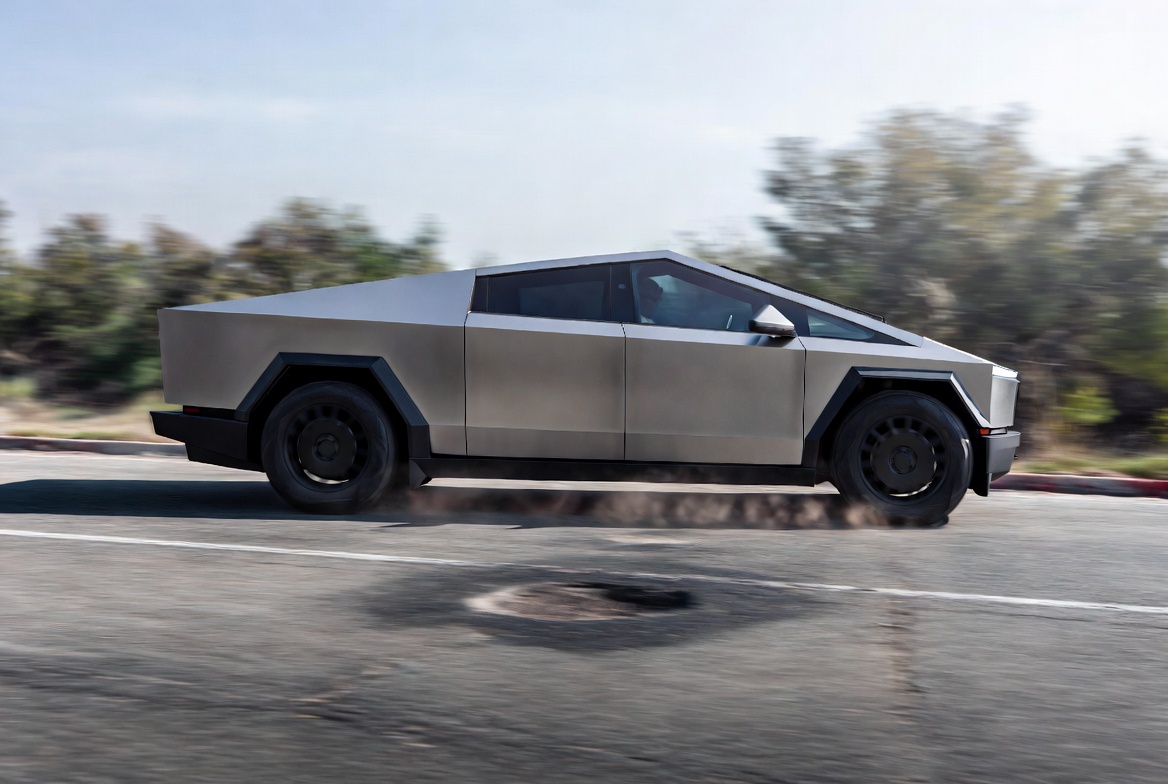
Tesla just released Full Self-Driving version 14.3. Among the upcoming improvements listed in the official release notes is pothole avoidance. Most people read that line and think, “Nice, my rims will thank you.” I read it and thought about something else entirely.
If Tesla’s software is sophisticated enough to detect a pothole, identify its location, and steer around it, then Tesla already has the data. The question worth asking is what they plan to do with it beyond protecting their own vehicles’ suspension.
Here is the answer they have not gotten to yet: sell it.
Every city, township, and county in America is fighting a losing battle against deteriorating roads. American drivers pay roughly three billion dollars a year to repair damage caused by potholes, according to AAA. Municipalities spend enormous sums sending maintenance crews out to patrol road networks, often reactively, based on citizen complaints, routine inspections, or sheer luck. Across cities, local authorities have reported a lack of information regarding the location and size of potholes as the single biggest hindrance in their efforts to repair the roads. The problem is not money. The problem is information.
Tesla has the information.
If one Tesla encounters a severe pothole, a temporary road closure, or a sudden traffic hazard, it would instantly alert the rest of the fleet. Other Teslas approaching the same area would automatically receive this information and adjust their speed or routing before the hazard is even visible on their cameras. That is already being built for internal fleet use. What no one seems to be asking is why that data pipeline should stop at the edge of Tesla’s ecosystem.
The business model writes itself. A municipality, let us say Powell, Ohio or Delaware County, signs up for a subscription service. Tesla aggregates all road surface anomaly detections logged by every Tesla vehicle operating within that geographic boundary and delivers a regular report: GPS-pinned pothole locations, severity classifications, recurrence patterns. The maintenance crew wakes up Monday morning with a prioritized work order instead of a map and a prayer. They drive directly to the problem, fix it, and return. No aimless patrols. No wasted labor hours. No guesswork.
Tesla collects this data anyway. The cost of packaging and delivering it is marginal. The revenue potential is not.
And if you think this stops at potholes, you are not thinking broadly enough.
Tesla’s FSD 14.3 already includes improved handling of small animals. The system is trained to detect and respond to animals in the roadway. Roadkill is the natural extension of that capability. This matters more than people realize. A dead deer in the middle of a state route is a hazard to the next ten drivers, a public health concern for the surrounding neighborhood, and a liability issue for the municipality that fails to remove it. Tesla’s vision encoder has been upgraded to better handle unusual objects encroaching into the driving path, trained on more challenging real-world examples sourced from the fleet. Detecting a carcass on the roadway is not a stretch from what the system already does.
Add that to the report. Pothole at this coordinate. Roadkill at this coordinate. Road debris of unusual size at this coordinate. The city dispatches accordingly.
Now extend the thinking further. AI-driven road condition detection can integrate with municipal planning by providing predictive maintenance strategies, allowing authorities to allocate budgets more effectively and prioritize repairs in high-risk areas before problems lead to accidents or costly lawsuits. Tesla’s fleet operates continuously. Unlike a city inspection vehicle that goes out once a quarter, Teslas are on the roads every single day. The data is not a snapshot. It is a living map of road conditions that updates in real time. That is not just operationally useful, it is the kind of intelligence that makes long-range infrastructure planning possible.
To be fair, Tesla is not entirely alone in having thought about this problem. Small companies have built dedicated pothole detection devices aimed at the municipal market. Researchers have published papers on fleet-based road condition monitoring. Concepts targeting municipalities and departments of transportation have demonstrated the ability to detect potholes, send incident data to a cloud system, and map all potholes on a dashboard. The idea has been circulating in academic and startup circles for years.
The difference is scale. None of those efforts have millions of vehicles on the road, already trained, already collecting, already networked. Tesla does. That is not a marginal advantage. It is a categorical one.
There is an old principle in business that the most valuable resources are the ones you already own but have not yet monetized. Tesla is sitting on precisely that kind of asset. Every mile driven by every Tesla is a data collection event. Road surface conditions, anomalies, hazards, debris, animal carcasses, every one of these things is being observed, classified, and logged so that the car can react appropriately. The car benefits from that data. The fleet benefits from that data. The next logical beneficiary is the public infrastructure the car is driving on.
Local governments are perennially cash-strapped and chronically short on actionable information. Tesla has actionable information in abundance. The transaction between these two parties is so obvious that the only real question is why it has not happened yet.
Someone at Tesla should be reading this!
Discover more from logical thinking in an illogical world
Subscribe to get the latest posts sent to your email.


One thought on “Tesla Is Sitting on a Gold Mine It Has Not Noticed Yet”