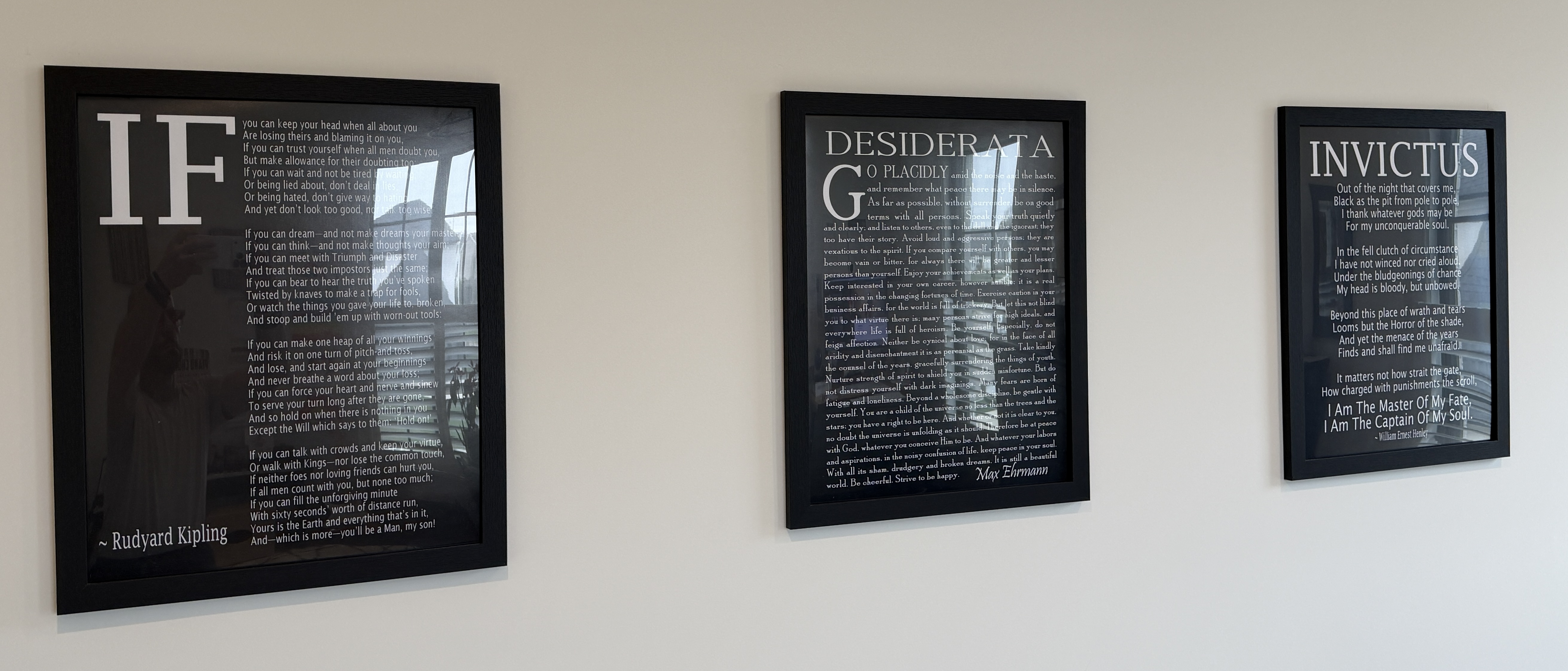


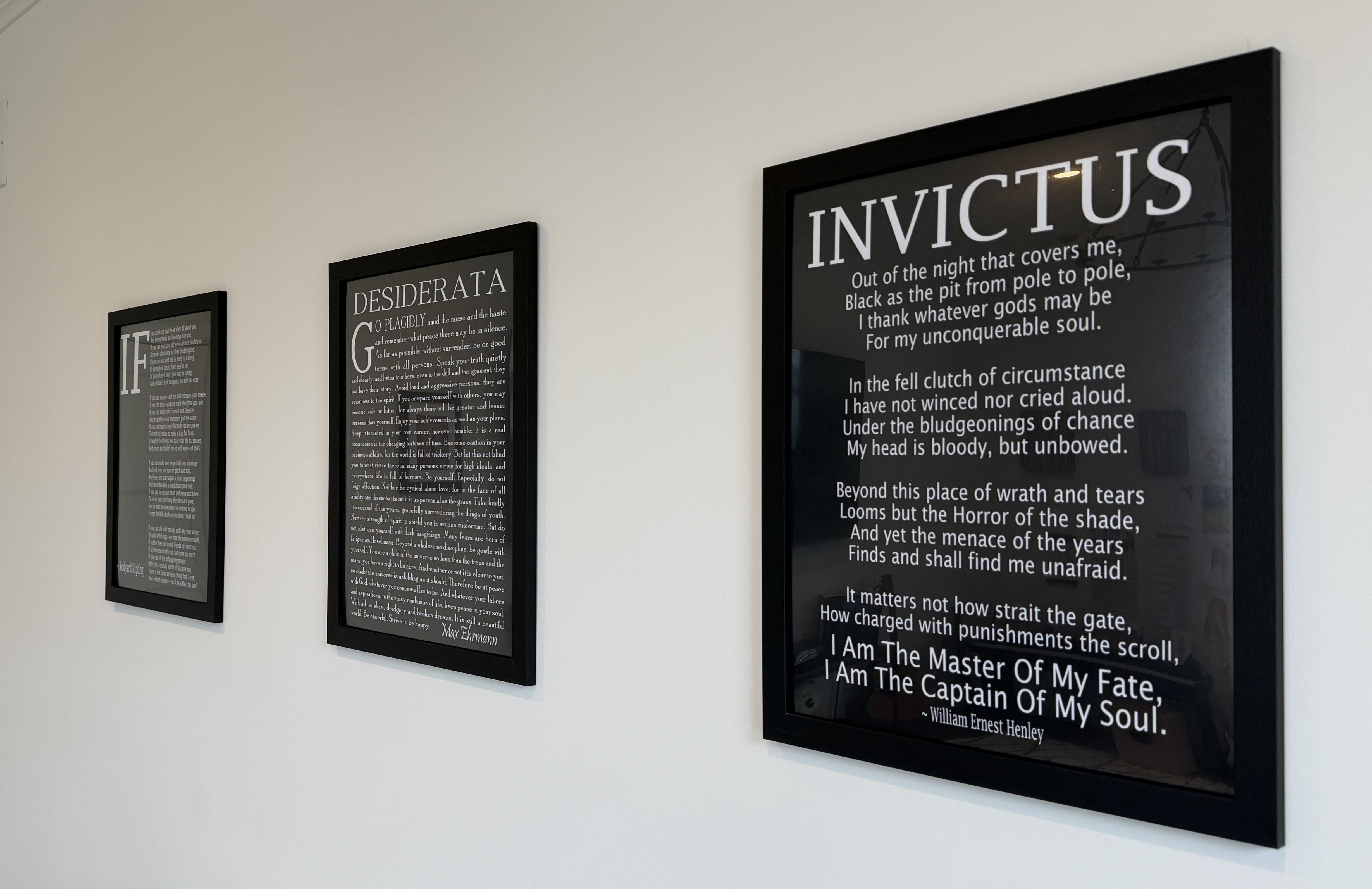
Every morning I walk into my office, sit down, and before I open a single email or take a single call, I look up at the wall above the couch. Three black-framed poems hang there in a row: If by Rudyard Kipling, Desiderata by Max Ehrmann, and Invictus by William Ernest Henley.
I have read each of them hundreds of times. I will read each of them hundreds more (hopefully!)
Below the poems, on the couch, sit a rotating cast of Squishmallows and stuffed animals that belong to my kids, Leah and Owen, who treat my office as an extension of their own domain. I have stopped fighting it. There is something I can not quite articulate about sitting across from Kipling’s call to unconquerable manhood while a pink dinosaur Squishmallow stares back at me. It works. It grounds me. It reminds me, without words, what all of this is actually for.
Let me tell you about the poems.
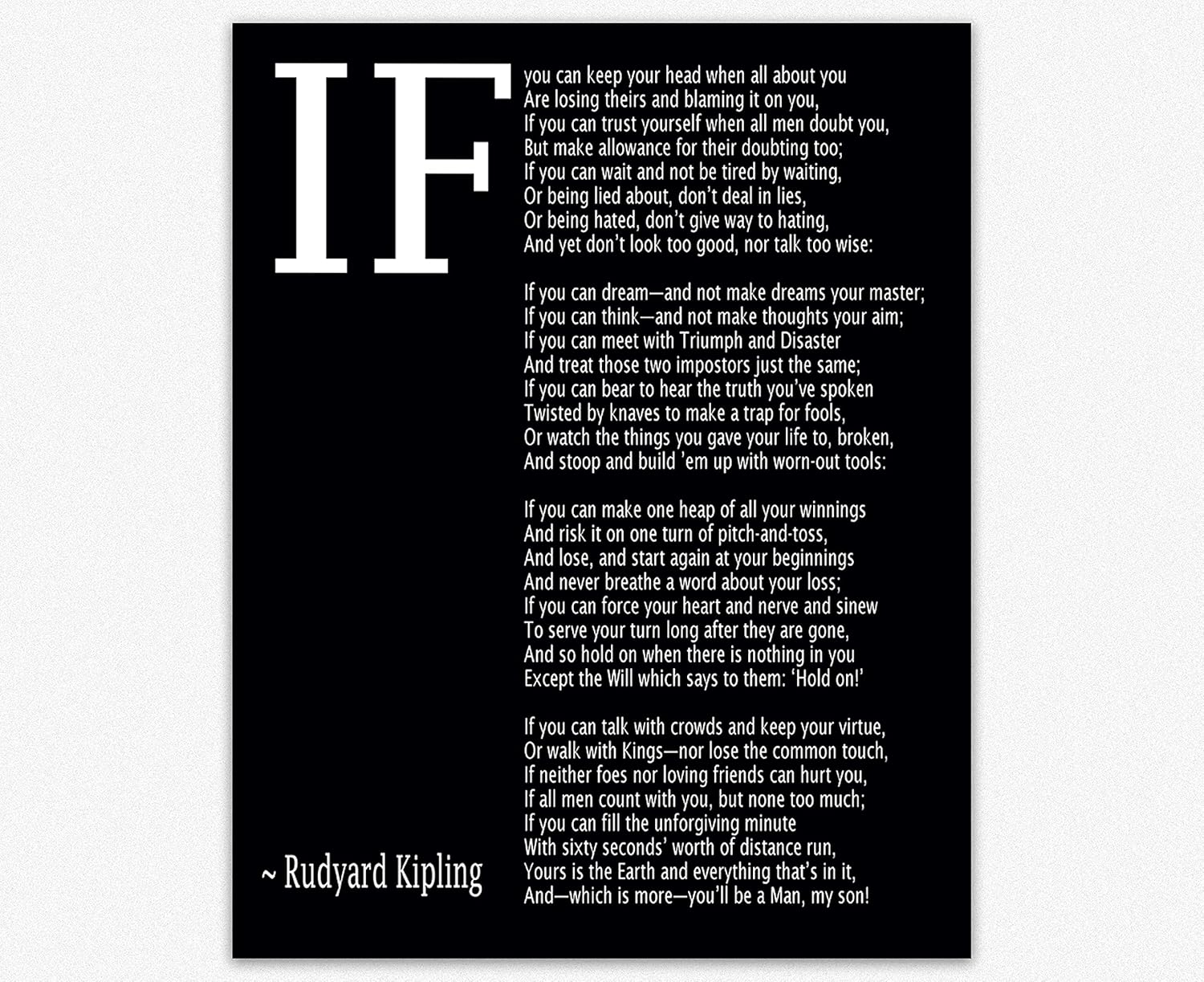
If— Rudyard Kipling (1895)
If there is a more complete instruction manual for being a decent human being compressed into a single page, I have not found it. Kipling wrote If as a letter to his son, and it reads that way: direct, unsparing, and deeply loving in the way that only high expectations can be.
The poem asks a series of questions. Can you keep your head when everyone around you is losing theirs? Can you trust yourself when others doubt you, while still making allowance for their doubting? Can you meet Triumph and Disaster and treat those two impostors just the same? Can you lose everything and start again without a word of complaint?
That last stanza is the one I come back to most. Walk with kings without losing the common touch. If neither foes nor friends can hurt you. Fill the unforgiving minute with sixty seconds worth of distance run.
These are not aspirations. They are standards. And the gap between where most of us actually live and where Kipling is pointing is the most useful thing in the room.
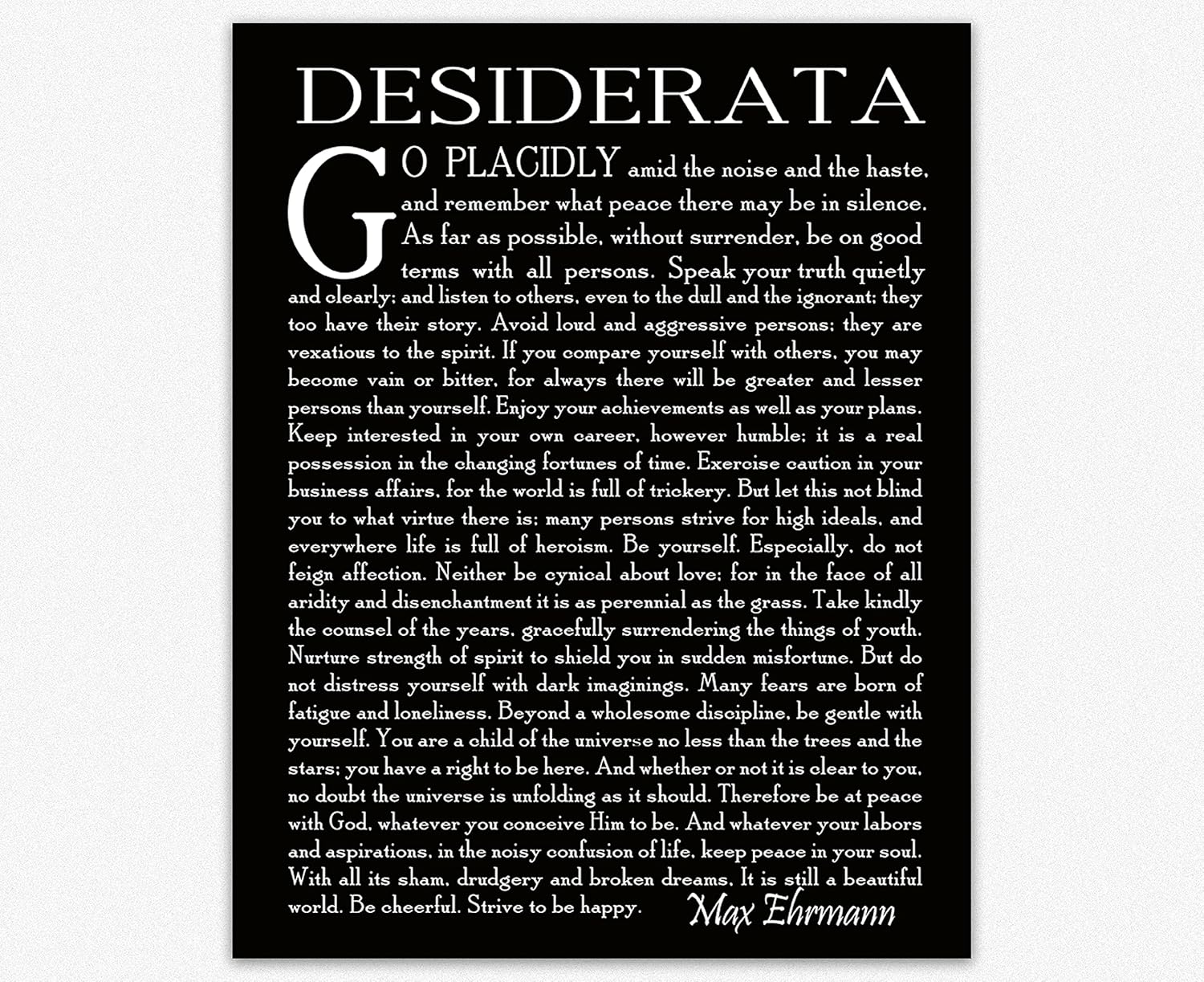
Desiderata— Max Ehrmann (1927)
Where Kipling is bracing, Ehrmann is gentle. Where If sets the bar high, Desiderata reminds you to be at peace with where you are while you are climbing toward it.
Go placidly amid the noise and the haste, it begins. Speak your truth quietly and clearly. Avoid loud and aggressive persons. Do not compare yourself with others. Be gentle with yourself.
That last instruction is the one I need most. I am not naturally gentle with myself. I keep score, I replay mistakes, I hold myself to standards I would never apply to anyone I care about. Desiderata is the corrective. It is permission, once a day, to remember that the universe is unfolding as it should, that you have a right to be here, that with all its sham and drudgery and broken dreams, it is still a beautiful world.
Be cheerful. Strive to be happy.
That is the whole thing, really. Everything else is commentary.
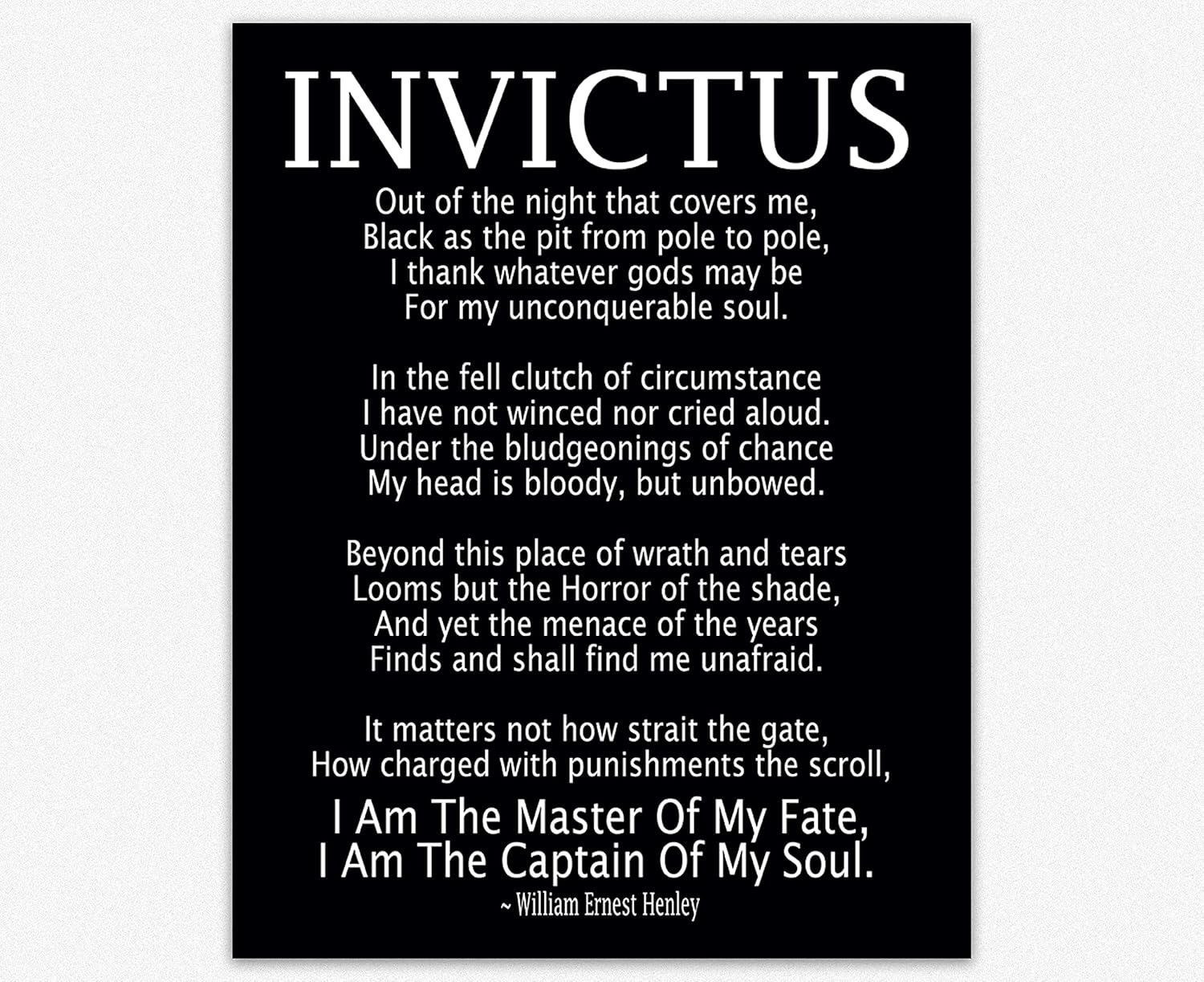
Invictus — William Ernest Henley (1875)
Henley wrote Invictus from a hospital bed, having already had one leg amputated below the knee and facing the possible loss of the other. The poem is not a comfortable meditation. It is a declaration made from the floor, by someone with every right to quit, choosing not to.
Out of the night that covers me, black as the pit from pole to pole, I thank whatever gods may be for my unconquerable soul.
It does not get more direct than that. And the closing lines, the ones that have lived on walls and in memories for 150 years, are not a boast. They are a decision.
I am the master of my fate. I am the captain of my soul.
You can read these words on a good day and feel proud. You can read them on your worst day and feel challenged. That is the sign of something worth keeping.
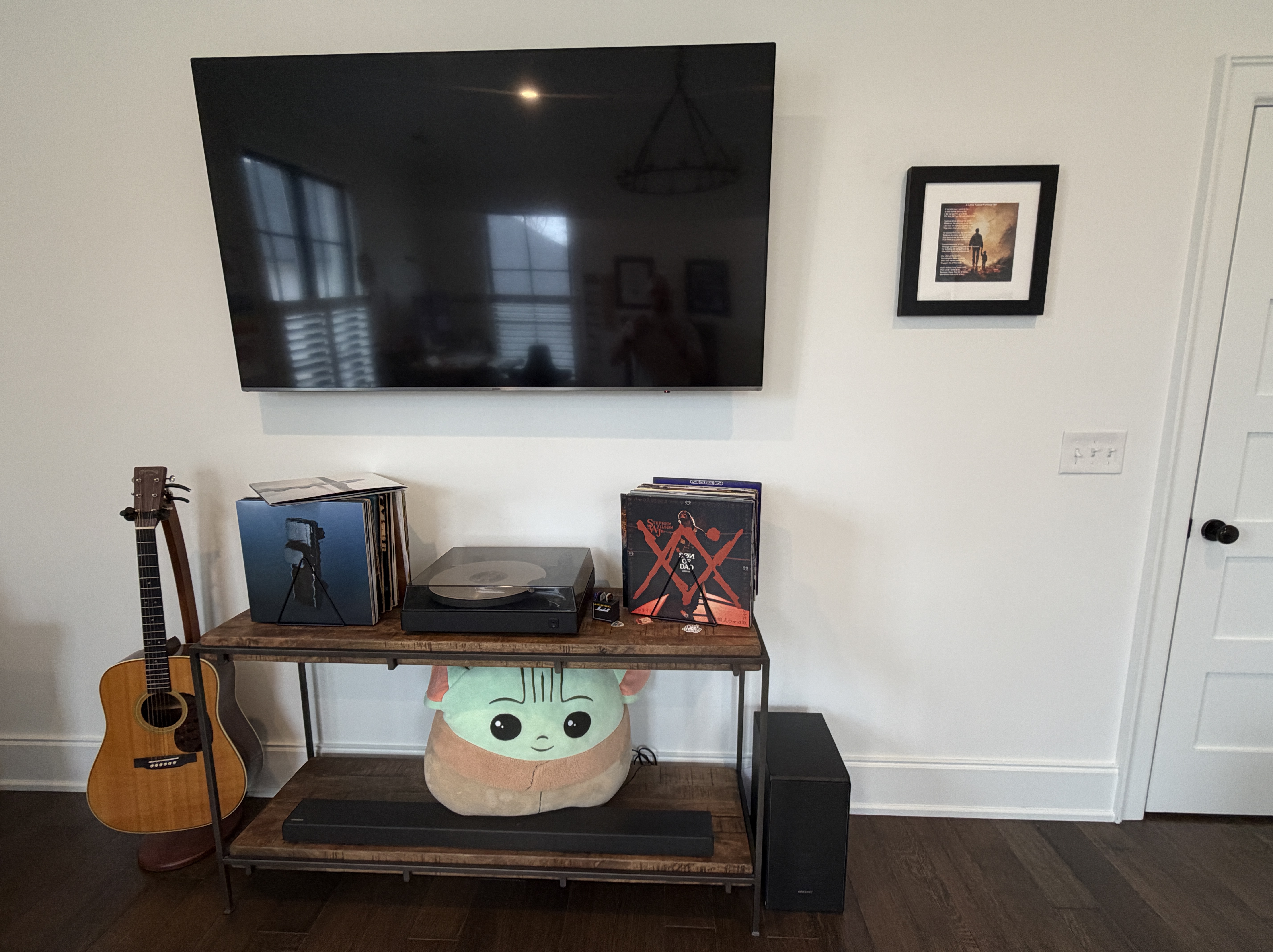
My Own Addition to the Wall
On the adjacent wall, I have hung a piece I created myself: a framed print based on my essay Cultivating Greatness: The Unwavering Belief in Our Children. It sits alongside the three poems as a reminder of why the standards Kipling describes, the peace Ehrmann counsels, and the resilience Henley demands all matter to me personally. It is available on Amazon if you would like a copy of your own.
Get These on Your Wall
If any of this resonates, I would genuinely encourage you to put these poems somewhere you will see them every day. Not on your phone. On your wall. There is a meaningful difference between scrolling past something and having it in your field of vision while you work.
I bought the three-print set here and the black frames here. Total investment: under $130 for something I look at every single day. That math is not close.
(Disclosure: these are Amazon affiliate links. If you purchase through them, I receive a small commission at no additional cost to you. I only link things I actually own and use, and as you can see from the photos, these definitely qualify.)
A Final Thought
As I wrote recently in To Be Great Is To Be Misunderstood, the people who shaped the ideas on my wall were not universally celebrated in their own time. Kipling is complicated by history. Henley wrote from a hospital bed that nearly killed him. Ehrmann’s poem was misattributed for decades and largely ignored until strangers started passing it around without knowing who wrote it.
None of that diminishes the work. The work stands because it is true, and truth does not require an audience to remain true.
Put something worth reading on your wall. Look at it every day. And do not be surprised if, over time, it quietly starts to change you.
Related reading:
To Be Great Is To Be Misunderstood
Cultivating Greatness: The Unwavering Belief in Our Children

Discover more from logical thinking in an illogical world
Subscribe to get the latest posts sent to your email.


One thought on “Three Poems That Keep Me Sane: What’s Hanging on My Office Wall (And Why) Part 1”