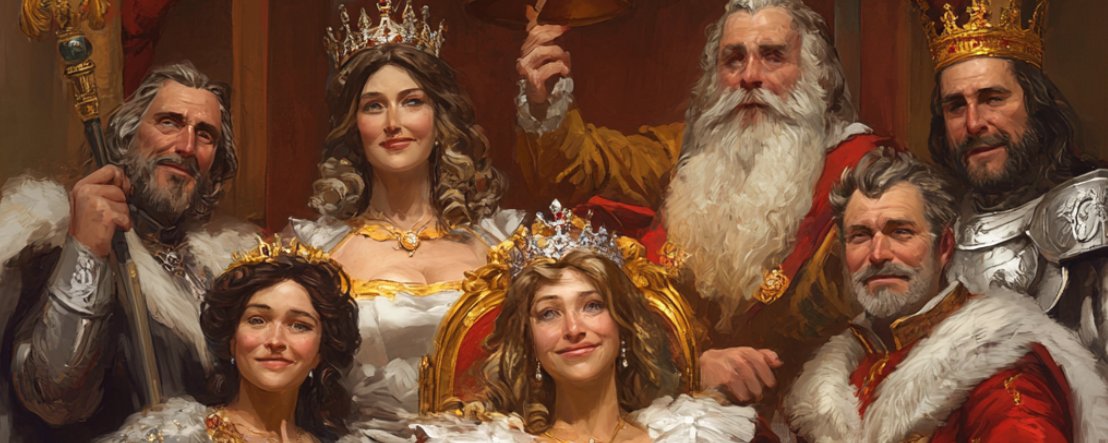

Royalty is a construct—an invention of humanity that elevates a select few while, by definition, diminishing everyone else. It’s a system rooted in the antiquated belief that some people are inherently better than others simply because of their bloodline. As a grown-up who values truth over tradition, I find this idea not only laughable but fundamentally at odds with reason and fairness. I recognize no royalty anywhere on Earth, and I believe it’s time for intellectuals and reasonably intelligent adults to step up, speak out, and say the same.
The concept of royalty mirrors theology in its reliance on faith over fact. Just as gods were created to explain the unexplainable, royalty was invented to impose order and hierarchy in a chaotic world. But we’re not children anymore, clinging to myths for comfort. We’re grown-ups, capable of seeing through the illusion. The idea that a “royal family” deserves titles like “Your Highness” or unquestioned reverence isn’t just outdated—it’s an affront to the principle that all humans are equal in their potential and worth. When we place some on a pedestal, we inherently push others down, perpetuating a cycle of inequality that benefits a few at the expense of the many.
I’m not here to vilify individuals born into royal families—they didn’t choose their circumstances any more than the rest of us did. But the system they represent is a relic, and it’s on us as thinking adults to call it what it is: a man-made fiction that holds no real meaning in a world striving for meritocracy and fairness. To bow to a king or queen, to treat them as inherently superior, is to deny the very intelligence we pride ourselves on. It’s laughable to think that in 2025, with all we know about science, sociology, and human potential, we should still entertain the notion that some humans are “better” because of their lineage.
I’m a big believer in grown-ups saying grown-up things, even if it makes us unpopular. Much like challenging dogmatic religious beliefs, questioning the validity of royalty can ruffle feathers. But truth isn’t served by silence. The British monarchy, for example, is often defended as a symbol of stability or tradition—Queen Elizabeth II was praised for her 70-year reign as a “calming influence.” Yet, what does that really mean in a democratic world? Stability shouldn’t come from a figurehead born into privilege; it should come from systems that reward merit and accountability, not birthright. And when accusations of racism or elitism arise, as they have with the royal family in recent years, it only underscores the disconnect between this institution and the values of equality we claim to hold dear.
I refuse to recognize royalty—not because I harbor ill will, but because it means nothing to me. It’s a construct that crumbles under the slightest scrutiny, revealing itself as nothing more than a historical artifact we’ve outgrown. To the people of the world, I say: let’s be brave enough to speak this truth. Let’s stop pretending that some humans are “royal” while others are not. We’re all part of the same species, the same global talent pool, and the only hierarchy that matters is one built on merit, not myth. It’s time for grown-ups to stand up, speak up, and let go of the fairy tales.
Discover more from logical thinking in an illogical world
Subscribe to get the latest posts sent to your email.

