Stop Arguing With Me About Apollo. Argue With This Instead.

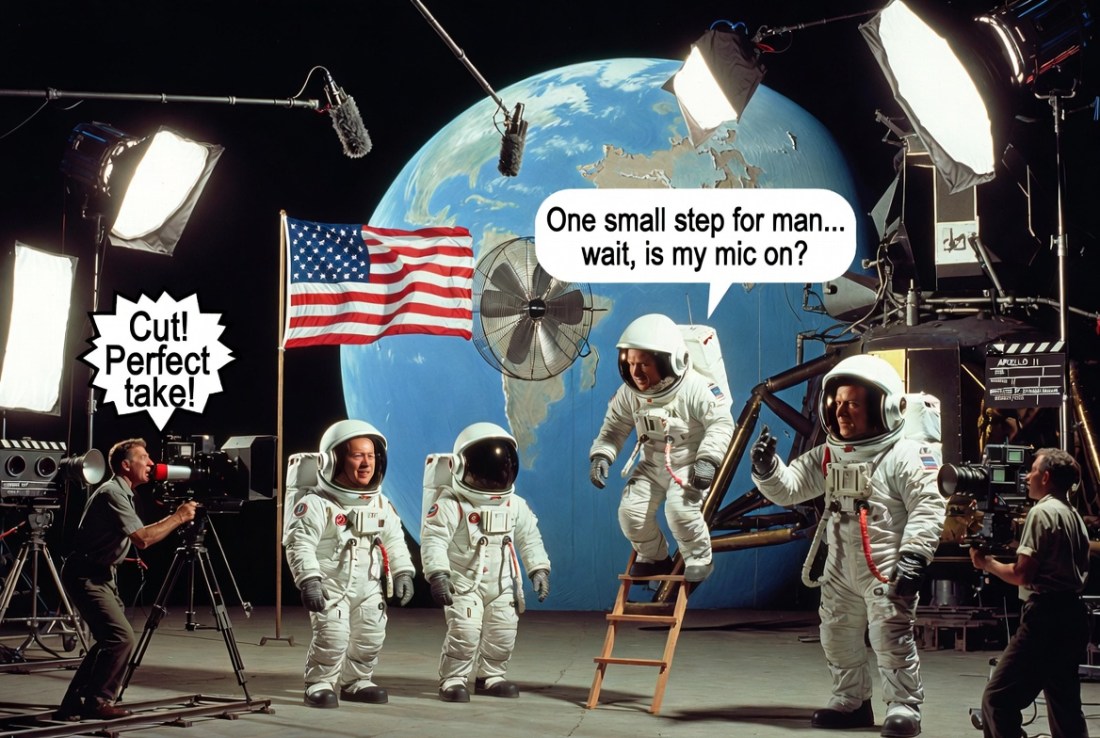
I've been questioning the Apollo narrative for over a decade. I'm done repeating myself. So I built an AI agent trained on my arguments. Tell it why you believe the narrative is true. I look forward to hearing how that goes.

Marriage Advice: Three Dates Per Month

Discussing the importance of intentionally scheduling time with your spouse to strengthen your marriage, introducing the concept of Three Dates Per Month. By designating one breakfast, one lunch, and one dinner date each month, couples can ensure they prioritize their relationship amidst life's demands, fostering connection and anticipation.

The Ten-Second Rule of Human Decency

During our first trip to Turks and Caicos, a friend shared a simple cultural insight that immediately changed how I interact with people everywhere. Islanders prefer that every interaction begin with a genuine greeting before making a request. Instead of walking up and asking for something immediately, you first acknowledge the person and ask how they are doing. This small habit transforms transactions into human interactions and reminds us that people are not service machines. Since learning this lesson, I’ve adopted it as a personal default, and the positive reactions it creates are remarkable.

Do You Care About Truth… or Winning?

This essay argues that the pursuit of truth should be the foundation of all serious intellectual conversations, especially in the Information Age where facts can be verified instantly. It makes the case that debates should embrace AI as a real-time tool for fact-checking and clarification, shifting the goal away from winning arguments and toward discovering objective reality. Truth should not depend on wit, memory, or rhetorical skill, but on evidence, verification, and the willingness to update beliefs when confronted with new information.

What’s Wrong With Loving Everyone Equally?

This essay challenges the instinct to feel automatic loyalty toward people who share our identity traits such as gender, race, nationality, or religion. It argues that this impulse is simply modern tribalism in new packaging, and that true equality cannot coexist with identity-based favoritism. The piece makes the case for universal humanism, the idea that moral concern should extend equally to all people, regardless of the group they belong to.

The Most Famous Man in History… and the 20-Year Disappearance No One Talks About

This essay explores the uncomfortable historical gap in the life of Jesus known as the “Lost Years,” the nearly two decades between childhood and the start of his ministry that lack any documented record. It questions why such a massive absence of evidence is rarely scrutinized despite Jesus being the most influential figure in history. The piece argues for applying the same intellectual standards to theology that we use everywhere else in life, and ultimately makes the case that morality does not require ancient authority, but can stand firmly on secular human values like empathy, compassion, and human flourishing.

Reacher Said Nothing

Inspired by Jack Reacher, this short essay reflects on one of the books’ most powerful recurring lines, “Reacher said nothing.” The silence is not weakness but disciplined strength. It reminds us that not every statement deserves a reply, not every provocation requires engagement, and sometimes being the adult in the room means choosing restraint. Silence, used wisely, is clarity, control, and quiet confidence.

China Is Test-Driving the Future. The Rest of Us Are Still Arguing About Gas Stations.

China is living in the transportation future while the West is still arguing about gas stations. With nearly half of all new cars sold in China already electric, and China responsible for two-thirds of global EV volume, the world’s largest auto market has shifted decisively away from gasoline. The essay highlights that EVs are winning because they are simply better to own, charge, and drive, and questions why people with no financial stake still defend the hassles of gas stations. Drawing on your 2019 essay imagining a world where EVs came first, the piece argues that China’s real-time transformation is the clearest signal of where the global auto industry is headed, whether skeptics like it or not.

Be the Adult in the Room

This essay argues that being the “adult in the room” means standing up for truth and accountability, even when it’s uncomfortable. Using a neighbor’s repeated irresponsibility as an example, it explores how society confuses honesty with hostility and silence with kindness. It condemns complacency through the parable, “What do you call ten people having dinner with a Nazi? Eleven Nazis,” emphasizing that ignoring wrongdoing is complicity. The piece encourages readers to speak calmly but firmly, following Dale Carnegie’s principles—never apologizing for maturity or moral clarity.

The Arrogance of Certainty: How “Egyptologists” Pretend to Know the Impossible

This essay dismantles the arrogance of modern “Egyptologists” who claim to know precisely how the pyramids were built despite glaring contradictions in their explanations. It argues that hauling multi-ton stones hundreds of feet high using primitive tools is implausible, that key evidence (like missing mummies) undermines the tomb theory, and that academic certainty is just another form of dogma. The piece calls for humility, suggesting that the Egyptians may have inherited rather than constructed these structures, and ends by asserting that true science thrives on curiosity, not the illusion of knowing everything.