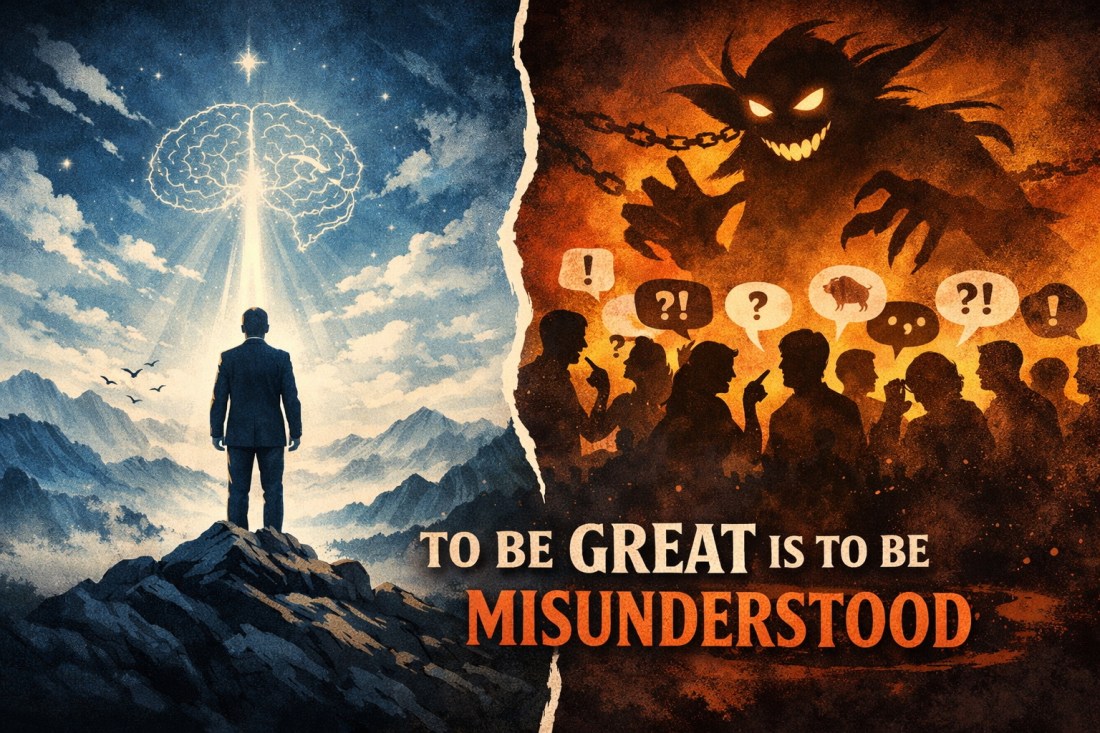
Ralph Waldo Emerson wrote "to be great is to be misunderstood" nearly two centuries ago, and it has lost none of its force. This essay unpacks what he actually meant, where the idea gets uncomfortable, and why the mere fact of being disagreed with proves nothing on its own. The key distinction: are you misunderstood because you are unclear and careless, or because you are saying something true that others are not yet ready to process? Emerson's challenge is to earn the second category, speak plainly, think rigorously, and then refuse to dilute the truth just to be liked. If no one ever misunderstands you, you are probably not saying anything worth remembering
Tag: life
The Ten-Second Rule of Human Decency
During our first trip to Turks and Caicos, a friend shared a simple cultural insight that immediately changed how I interact with people everywhere. Islanders prefer that every interaction begin with a genuine greeting before making a request. Instead of walking up and asking for something immediately, you first acknowledge the person and ask how they are doing. This small habit transforms transactions into human interactions and reminds us that people are not service machines. Since learning this lesson, I’ve adopted it as a personal default, and the positive reactions it creates are remarkable.
Do You Care About Truth… or Winning?
This essay argues that the pursuit of truth should be the foundation of all serious intellectual conversations, especially in the Information Age where facts can be verified instantly. It makes the case that debates should embrace AI as a real-time tool for fact-checking and clarification, shifting the goal away from winning arguments and toward discovering objective reality. Truth should not depend on wit, memory, or rhetorical skill, but on evidence, verification, and the willingness to update beliefs when confronted with new information.
What’s Wrong With Loving Everyone Equally?
This essay challenges the instinct to feel automatic loyalty toward people who share our identity traits such as gender, race, nationality, or religion. It argues that this impulse is simply modern tribalism in new packaging, and that true equality cannot coexist with identity-based favoritism. The piece makes the case for universal humanism, the idea that moral concern should extend equally to all people, regardless of the group they belong to.
The Most Famous Man in History… and the 20-Year Disappearance No One Talks About
This essay explores the uncomfortable historical gap in the life of Jesus known as the “Lost Years,” the nearly two decades between childhood and the start of his ministry that lack any documented record. It questions why such a massive absence of evidence is rarely scrutinized despite Jesus being the most influential figure in history. The piece argues for applying the same intellectual standards to theology that we use everywhere else in life, and ultimately makes the case that morality does not require ancient authority, but can stand firmly on secular human values like empathy, compassion, and human flourishing.
Reacher Said Nothing
Inspired by Jack Reacher, this short essay reflects on one of the books’ most powerful recurring lines, “Reacher said nothing.” The silence is not weakness but disciplined strength. It reminds us that not every statement deserves a reply, not every provocation requires engagement, and sometimes being the adult in the room means choosing restraint. Silence, used wisely, is clarity, control, and quiet confidence.
Compliance, Cancer, and Combustion: A Day That Earned Its Name
One day. Three disasters. A lasting shift in perspective. This essay is about January 22, 2018, and how fear and loss became unlikely catalysts for growth and gratitude.
Be the Adult in the Room
This essay argues that being the “adult in the room” means standing up for truth and accountability, even when it’s uncomfortable. Using a neighbor’s repeated irresponsibility as an example, it explores how society confuses honesty with hostility and silence with kindness. It condemns complacency through the parable, “What do you call ten people having dinner with a Nazi? Eleven Nazis,” emphasizing that ignoring wrongdoing is complicity. The piece encourages readers to speak calmly but firmly, following Dale Carnegie’s principles—never apologizing for maturity or moral clarity.
The Arrogance of Certainty: How “Egyptologists” Pretend to Know the Impossible
This essay dismantles the arrogance of modern “Egyptologists” who claim to know precisely how the pyramids were built despite glaring contradictions in their explanations. It argues that hauling multi-ton stones hundreds of feet high using primitive tools is implausible, that key evidence (like missing mummies) undermines the tomb theory, and that academic certainty is just another form of dogma. The piece calls for humility, suggesting that the Egyptians may have inherited rather than constructed these structures, and ends by asserting that true science thrives on curiosity, not the illusion of knowing everything.
The End of Privacy: Why Cameras Everywhere Might Save Civilization
If there’s no expectation of privacy in public, why fear the camera? A fully transparent world—where everyone is both the watcher and the watched—could make crime nearly obsolete. Accountability is the true price of freedom.